what are you looking for?

Every beauty brand faces a defining choice when launching a new skincare or cosmetic formulation: should you dispense it from a sleek bottle or scoop it from an elegant jar? This single decision impacts formula stability, consumer ritual, shelf aesthetics, and freight economics. Choosing incorrectly can compromise active ingredients or frustrate customers with messy application.
At a fundamental level, the difference between a cosmetic bottle and a cosmetic jar centers on formula viscosity, air-exposure risk, dispensing mechanics, and ritualistic application. Bottles feature narrow openings designed for liquid flow and metered dispensing, whereas jars feature wide mouths engineered for rich, high-viscosity formulations.
For skincare founders and cosmetic product developers, mastering this distinction is essential to engineering high-converting, compliant beauty packaging. Discovering the complete engineering capabilities and custom manufacturing heritage of an industry leader like Lisson Packaging OEM Solutions gives emerging and established beauty lines the strategic clarity needed to make the right investment.
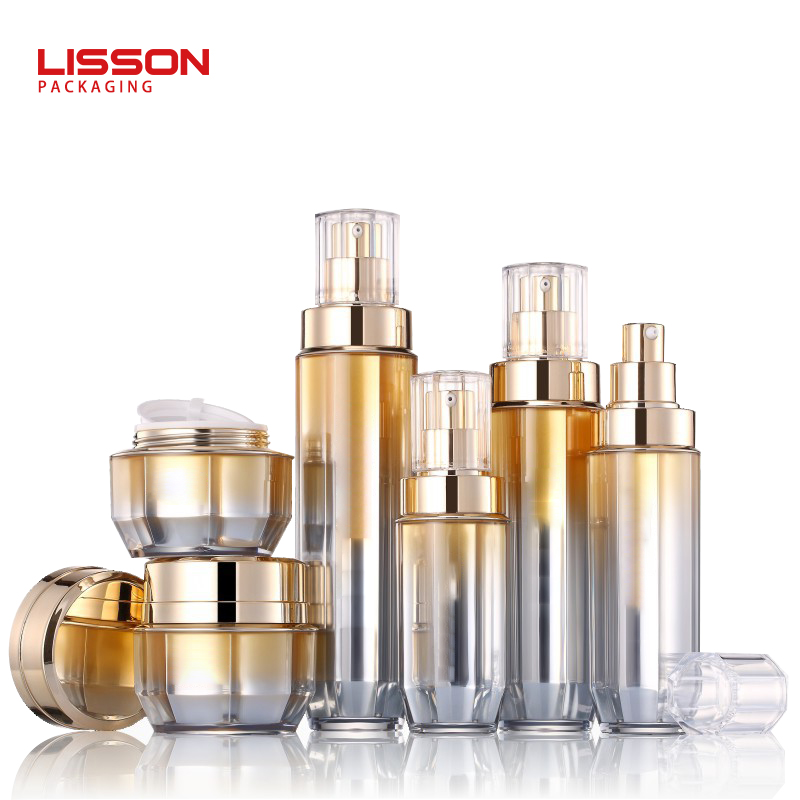
Formula Compatibility: Cosmetic bottles are engineered for low-to-medium viscosity liquids (serums, toners, lotions), while jars accommodate high-viscosity semi-solids (rich creams, balms, body scrubs).
Oxidation & Preservation: Bottles paired with pump or airless closures minimize oxygen and microbial exposure; jars expose larger surface areas of product to ambient air and finger contact upon opening.
Dispensing Accuracy: Bottles offer controlled, metered dosage (droppers, treatment pumps, mist sprayers), whereas jars provide unrestrained sensory access allowing consumers to scoop as much product as desired.
Consumer Experience: Jars evoke indulgence, luxury, and tactile rituals; bottles convey clinical precision, hygiene, speed, and modern daily convenience.
Manufacturing Versatility: Both form factors can be molded from glass, acrylic, PET, PE, or PCR polymers, allowing uniform brand line integration.
To make an informed packaging procurement choice, you must understand the anatomical and functional anatomy of both container classes. In the cosmetic manufacturing sector, form directly dictates function.
A cosmetic bottle is a rigid or semi-rigid container characterized by a narrow neck and an aperture significantly smaller than the diameter of its body. This restricted opening prevents uncontrolled spillages and is tailored to accept mechanical dispensing closures, including treatment pumps, mist sprayers, dropper pipettes, disc-top caps, and airless piston assemblies. Bottles are designed to store, preserve, and dispense low-to-medium viscosity fluids.
A cosmetic jar is a wide-mouth container whose aperture is typically equal or nearly equal to the overall diameter of the container body. Jars lack extended necks and dispense product via direct manual access using fingers or cosmetic spatulas. They are constructed specifically for dense, semi-solid cosmetic preparations that cannot flow smoothly through narrow dipping tubes or pump orifices.
|
Technical Parameter |
Cosmetic Bottle |
Cosmetic Jar |
|---|---|---|
|
Mouth Aperture |
Narrow (Typically 18mm to 28mm) |
Wide (Typically 40mm to 89mm+) |
|
Viscosity Range |
Low to Medium (1 to 30,000 cPs) |
High to Semi-Solid (30,000 to 200,000+ cPs) |
|
Air Exposure Per Use |
Minimal to Zero (especially with airless pumps) |
High (entire surface exposed when unsealed) |
|
Primary Closures |
Lotion Pumps, Droppers, Sprayers, Screw Caps |
Threaded Screw Lids, Inner Gaskets, Spatula Sets |
|
Product Evacuation |
85% - 99% (Airless achieves ~99%) |
Near 100% (Complete manual scooping) |
|
Preservative Demand |
Standard to Low (formula well protected) |
Higher (must withstand repeated finger dips) |
The single most critical technical driver distinguishing a cosmetic bottle from a jar is rheology—specifically, formulation viscosity and yield stress. When formulation chemists create a cosmetic mixture, its resistance to gradual deformation determines how that liquid or emulsion must travel from container to skin.
Cosmetic bottles rely on gravitational flow, siphon suction, or mechanical vacuum displacement. As a result, products packaged in bottles must possess adequate fluid mobility:
Facial Serums and Boosters: Highly concentrated active liquids requiring micro-dosing via precision glass or plastic dropper assemblies.
Toners, Essences, and Micellar Waters: Free-flowing watery formulations dispensed through orifice reducers or fine-mist atomizers.
Emulsions and Daily Lotions: Light, spreadable creams with viscosities below 30,000 centipoise that move easily through a standard pump dip tube.
Cleansing Oils and Liquid Foundations: Formulas requiring exact, measured dispensing without contaminating the bulk formulation.
For daily fluid regimens, brands frequently standardize on specialized Custom Cosmetic Bottles Packaging to deliver accurate single-dose quantities while preserving fluid cleanliness.
In contrast, dense lipid emulsions, anhydrous balms, and particulate suspensions simply will not pass through a 1mm to 2mm dip tube orifice. Attempting to package such formulas in bottles causes vacuum collapse, pump clogging, and customer dissatisfaction. Cosmetic jars serve:
Rich Night Creams and Barrier Repair Balms: High-wax, high-oil emulsions engineered with thick buttery textures that hold their physical shape on a spatula.
Clay and Gel Facial Masks: Heavy suspensions that dry or set quickly when exposed, requiring rapid wide-scoop access before cap resealing.
Exfoliating Body Scrubs and Salts: Particle-dense formulations containing sugar, walnut granules, or sea salt crystals that immediately jam standard pump mechanisms.
Lip Sleeping Masks and Solid Pomades: Anhydrous formulas that require tactile dipping or spatula application for precise spread across targeted areas.
Cosmetic formulation integrity depends profoundly upon environmental isolation. Every time packaging is opened, ambient air, airborne fungal spores, UV rays, and human epidermal flora interact with the product matrix.
Cosmetic bottles provide an inherently superior environmental barrier. Because consumers interact strictly with the external actuator or nozzle, their fingers never contact the internal bulk liquid. Furthermore, modern airless pump bottles replace internal dip tubes with a rising piston plate. As the customer presses the pump, the platform rises, expelling the exact dose while preventing oxygen intake entirely.
This closed architecture provides decisive advantages for clean, organic, and preservative-lite cosmetics:
Active Ingredient Stability: Fragile antioxidants like L-ascorbic acid (Vitamin C), pure retinol, and botanical polyphenols resist oxidation up to 15% to 25% longer inside sealed bottle enclosures.
Reduced Preservative Load: Because bacterial transfer from hands is prevented, cosmetic formulators can utilize milder, natural preservative systems without risking microbial bloom.
Zero Spillage in Transit: Locking pump collars and screw threads eliminate leakage during air transit or vigorous shipping routines.
While jars offer unparalleled sensory indulgence, their wide aperture presents significant surface contact. When a customer removes a jar lid, up to 15 to 30 square centimeters of product are directly exposed to bathroom humidity and airborne micro-particles. Repeated dipping with unwashed hands can introduce bacteria such as Staphylococcus epidermidis into the matrix.
To combat these challenges, premium beauty lines implement rigorous packaging engineering strategies:
Barrier Seals and Secondary Gaskets: Equipping jars with interior pull-tab discs and PE foam shims under the cap to block vapor transmission during storage.
Dedicated Spatula Integration: Supplying branded mini cosmetic spatulas made from zinc alloy, acrylic, or bamboo to eliminate direct finger immersion.
Robust Broad-Spectrum Preservatives: Formulating with water-phase preservative systems designed specifically to withstand repeated microbial challenges over a 12-to-24 month Period-After-Opening (PAO) timeline.
Both cosmetic bottles and cosmetic jars can be manufactured from a broad spectrum of polymers and inorganic glass. However, material selection fundamentally alters consumer perception, weight, drop resistance, and sustainability metrics.
Glass has historically represented the benchmark for luxury. It is heavy, chemically inert, and provides supreme optical clarity. Yet, glass containers fracture upon bathroom impact and incur high international shipping costs due to excessive tare weight. A 50g glass cream jar often weighs over 160g empty, inflating carbon emissions and parcel fees.
To merge glass-like optical beauty with industrial shatter-resistance, luxury brands frequently turn to high-grade Acrylic Cosmetic Bottles and Jars. Polymethyl methacrylate (PMMA / Acrylic) provides up to 92% light transmittance, an optical refractive index of 1.49, and double-walled construction that delivers a substantial, prestigious tactile feel at roughly half the total mass of glass.
For mass-market, e-commerce, and high-frequency replenishment lines, light-density plastics offer ideal cost-efficiency. High-density polyethylene (HDPE), polypropylene (PP), and polyethylene terephthalate (PET) offer distinct operational benefits:
PET (Polyethylene Terephthalate): Crystal-clear, lightweight, and 100% recyclable, PET is the undisputed champion for clean shampoos, micellar bottles, and body washes.
PP (Polypropylene): High thermal resistance, fatigue strength, and chemical stability make PP the premier choice for jar inner cups, flip-top closures, and pump bodies.
PCR (Post-Consumer Recycled) Resins: Reclaimed resins (PCR-PET and PCR-PE) drastically decrease petroleum dependence, satisfying strict circular economy mandates in European and North American markets.
Beauty enterprises seeking resilient, shatter-proof utility across daily routines regularly source versatile Plastic Cosmetic Bottles Wholesale to maintain lightweight shipping without sacrificing structural rigidity.
Packaging is silent salesmanship. The physical container doesn't simply hold skincare; it shapes how the consumer feels during their morning and evening beauty rituals.
Unscrewing a wide-mouth jar, removing an embossed inner lid, and scooping a measured portion of velvet moisturizer creates an indulgent, sensory experience. Skincare consumers equate the substantial heft and wide surface of a jar with pampering self-care. It invites touch, visual inspection of the formulation's color and whip, and conscious pacing. For anti-aging night creams, overnight recovery masks, and premium body butters, the jar remains the psychological gold standard of prestige.
Conversely, the cosmetic bottle communicates pharmaceutical precision, bio-technological innovation, and modern speed. Pressing an airless pump to dispense exactly 0.25ml of niacinamide serum signals active efficacy. It assures the modern professional that the formula is sterile, precisely dosed, and mess-free. In fast-paced morning routines or gym locker rooms, a quick pump or spray bottle dramatically outperforms a two-handed jar opening ritual.
When engineering your next skincare collection, use this systematic checklist to determine whether a cosmetic bottle or jar matches your commercial and technical requirements:
Evaluate Product Rheology: If your formula flows freely under gravity or light suction (below 30,000 cPs), select a bottle. If it clings to the vessel walls or requires manual scoop intervention, select a jar.
Analyze Oxygen Sensitivity: Does your formula contain unencapsulated Vitamin C, pure retinol, or probiotic ferment lysates? If yes, prioritize airless bottles over standard wide-mouth jars.
Determine Retail and Shipping Channels: If your business relies predominantly on direct-to-consumer (DTC) cross-border shipping, bottles and double-wall acrylic jars offer vastly superior drop protection compared to fragile heavyweight glass.
Calculate Dosage Control Requirements: Does the consumer need an exact dosage per application (e.g., concentrated glycolic peels or retinoids)? Bottles with metered pumps or calibrated pipettes protect consumers from accidental overuse.
Assess Sustainability Mandates: Determine whether your target demographic values 100% circular post-consumer recycled materials (PCR plastics) or endlessly refillable inner-cup jar architectures.
Creating a memorable skincare brand requires a packaging manufacturing partner capable of harmonizing aesthetic design, structural mold engineering, and rigorous chemical stability testing. Independent beauty creators and global skincare conglomerates alike rely on specialized OEM/ODM capabilities to bring visionary concepts to retail shelves.
Lisson Packaging delivers fully integrated cosmetic container manufacturing, operating more than 20 automated production lines, over 1,000 precision injection molds, and dedicated ISO-certified quality assurance cleanrooms. From cutting-edge airless vacuum bottles to heavy-walled acrylic cream jars, Lisson empowers beauty enterprises with comprehensive surface decoration techniques—including multi-color silk screening, precision hot foil stamping, vacuum metallization, UV gradient spray-painting, and soft-touch flocking.
Whether your brand requires custom mold development for an iconic flagship bottle profile or high-volume circular packaging made from certified PCR-PE and PCR-PET resins, choosing a premier manufacturing partner guarantees low defect rates, verified chemical compatibility, and on-time global logistics delivery.
The difference between a cosmetic bottle and a cosmetic jar is not simply aesthetic—it is a functional, chemical, and experiential choice that defines your product's market success. Bottles deliver hygienic isolation, precise dosing, and lightweight travel convenience for liquid serums and lotions. Jars provide luxurious tactile engagement, complete product accessibility, and rich application rituals for dense moisturizers and scrubs.
By aligning your packaging selection with formula viscosity, ingredient volatility, and customer expectations, you elevate brand trust and drive recurring purchases. Evaluate your product roadmap today and partner with experienced packaging engineers to create containers that protect your formulas and captivate your consumers.
Generally, no. Standard dip-tube pump bottles cannot pull dense, high-yield-stress creams, resulting in air pockets, cavitation, and pump failure. However, specialized wide-bore airless pump bottles or squeeze bottles with oversized orifices can successfully dispense medium-to-heavy creams without clogging.
Cosmetic jars provide an irreplaceable psychological sense of richness, prestige, and mindful self-care. The tactile visual appeal of a glistening cream inside a heavy acrylic or glass jar cannot be replicated by a closed pump bottle. When accompanied by a hygienic mini-spatula and proper preservation systems, jars remain completely safe and highly coveted.
Cosmetic bottles—particularly plastic and acrylic airless varieties—are generally more cost-effective to ship. Jars tend to have wider footprints that demand larger shipping cartons, and heavy glass jars significantly increase volumetric and gross package weight compared to slender, lightweight bottles.
Optical-grade acrylic (PMMA) is the premier luxury alternative to glass. It delivers 92% light transmittance, exceptional surface gloss, and substantial hand-weight while offering up to 10 to 17 times higher impact resistance against drops and fractures.
Airless bottles eliminate exposure to oxygen and fingers entirely through a mechanical rising piston, extending the shelf life of sensitive organic formulas by up to 15% and achieving up to 99% product evacuation. Traditional jars allow 100% manual product retrieval but require stronger preservative systems to prevent microbial contamination.