what are you looking for?

For cosmetic brands, packaging needs to look distinctive without making the product unnecessarily expensive. A unique cosmetic bottle does not always require a completely new structure or an expensive custom mold. In many cases, brands can create a recognizable package by combining a practical bottle shape with the right color, finish, printing, closure, and dispensing system.
The key is to separate visual differentiation from structural complexity. When these elements are planned carefully, cosmetic brands can develop attractive packaging while keeping tooling, decoration, and production costs under control.
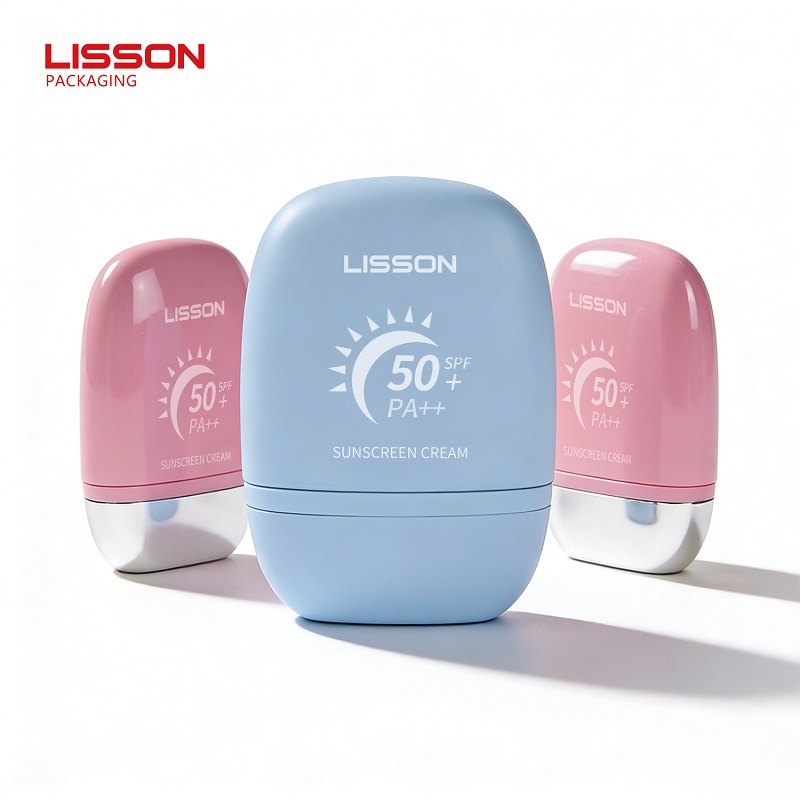
A practical way to control packaging costs is to start with a proven bottle structure and focus customization on the elements customers notice most.
Instead of changing the entire bottle, a brand can customize the color, surface finish, logo treatment, printing, cap, pump, or other visible components. These details can create a strong visual identity without necessarily requiring a completely new bottle structure.
This approach is particularly useful for skincare and personal care brands that need distinctive packaging while also considering minimum order quantities, production efficiency, filling requirements, transportation, and long-term supply.
Brands looking for different starting shapes can explore Lisson's cosmetic plastic bottle collection , which includes different plastic bottle formats for cosmetic and personal care applications.
The shape of a cosmetic bottle has a major influence on both appearance and manufacturing requirements. However, an unusual shape does not always mean a better package.
For many projects, using an existing cylindrical, oval, square, flat, or other production-ready shape can provide a useful starting point. The brand can then build its visual identity through colors, decoration, closures, and surface treatments.
A standard bottle structure can also make it easier to compare samples, test different finishes, and develop several products within the same packaging family.
A new mold becomes more relevant when the physical shape itself is an important part of the product concept. For example, a distinctive silhouette may be useful when a brand wants its packaging to be immediately recognizable even without seeing the label.
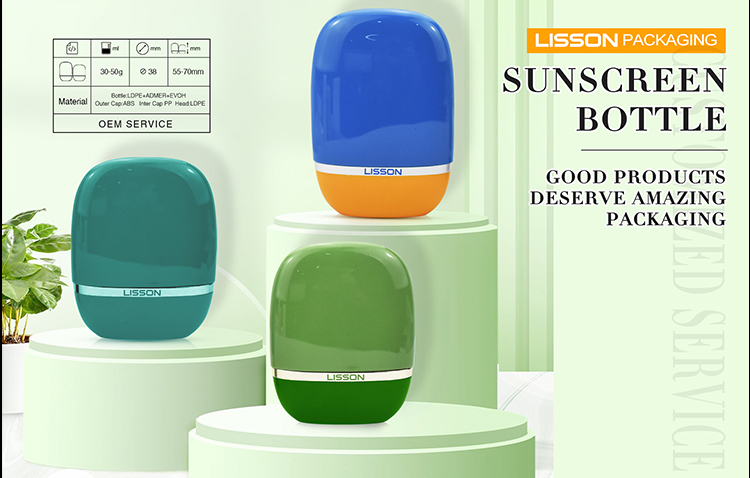
Color is one of the easiest packaging elements for consumers to notice. A consistent color system can help a skincare or beauty brand create a recognizable product family without changing the underlying bottle structure.
For example, the same bottle shape can be produced in different colors for different product functions. A cleanser may use one color, a moisturizer another, and a sunscreen a third, while the overall bottle silhouette remains consistent.
Color can also help different products within the same collection look related. This creates a consistent visual language while allowing each SKU to remain easy to identify.
Lisson's customization service supports custom color matching and Pantone color development, together with different surface treatments and decoration options.
Two bottles with exactly the same shape can create very different impressions when their surface treatments are changed.
Matte, glossy, frosted, metallic, sprayed, and other finishing effects can influence how customers perceive a cosmetic package. A simple plastic bottle with a restrained matte finish can communicate a very different positioning from the same bottle with a glossy or metallic treatment.
For brands developing premium skincare products, surface finishing can therefore be a useful design tool. The goal is not to use every available decoration method, but to select the treatments that support the brand's positioning.
Lisson provides different cosmetic bottle decoration options, including silk-screen printing, hot stamping, spraying, frosting, and other surface treatments.
The dispensing component can become an important part of a cosmetic package's visual identity.
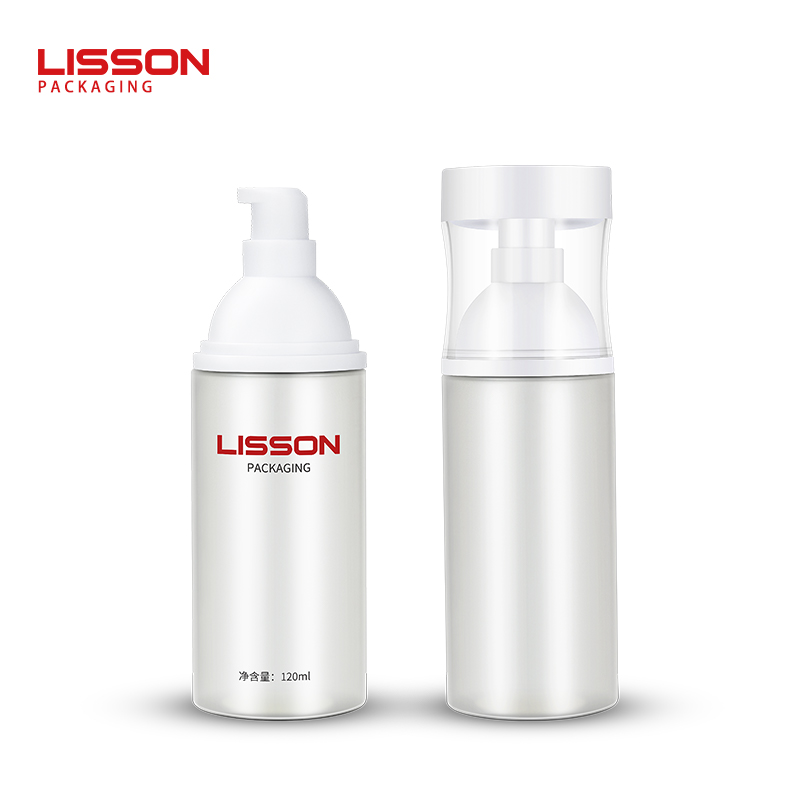
A simple bottle body can look significantly different when paired with a contrasting pump, metallic-looking cap, fine mist sprayer, or another customized closure. This can be especially useful for lotions, cleansers, hair-care products, and other products where the dispensing experience is part of the customer's interaction with the package.
Instead of redesigning the entire bottle, brands can sometimes create differentiation by selecting the right closure and dispensing system.
For projects that require a dispensing solution, Lisson's pump bottle collection includes different pump-based packaging options for cosmetic and personal care products.
The material should be selected according to the formula, packaging structure, dispensing method, appearance, and production requirements rather than appearance alone.
Common cosmetic packaging materials include HDPE, PE, PP, PET, and PETG. Each material can offer different characteristics in terms of rigidity, transparency, flexibility, appearance, and application.
For example, HDPE can be used for different skincare and personal care packaging applications where durability and chemical resistance are important considerations. PET and PETG can provide greater transparency for brands that want to showcase the product inside the package.
The right material should therefore be evaluated together with the product formula, bottle design, dispensing system, and intended market.
For brands exploring HDPE packaging, this 30ml and 50ml EVOH-layer HDPE oval bottle is one example of a cosmetic bottle designed for applications such as sunscreen and hand cream.
When developing a cosmetic package, decoration should have a clear purpose. A logo, product name, color block, metallic detail, or carefully positioned graphic can sometimes create more brand recognition than a complicated bottle structure.
Silk-screen printing is useful for applying logos and text directly to a bottle. Hot stamping can create metallic decorative details, while labeling provides another flexible way to communicate product information and brand graphics.
For a minimalist skincare brand, a simple bottle with a carefully selected color and small logo may be enough. A premium beauty line may instead use a metallic detail or more elaborate surface finish.
The right combination depends on the target market, product positioning, expected production volume, and overall packaging budget.
Packaging design is not only about how a bottle looks. The dispensing system and the way the package interacts with the formula can also influence the choice of packaging.
Airless packaging is designed around a controlled dispensing mechanism that helps limit direct air exposure during use. This makes airless bottles a common consideration for certain skincare products, including creams, serums, and other formulations where controlled dispensing is important.
The design can also provide a clean and modern appearance that works well with premium skincare branding.
For brands considering this format, Lisson's airless bottle collection includes different capacities and designs for skincare applications.
A bottle may look attractive in a digital rendering, but it still needs to work as a physical package during production, filling, transportation, and daily use.
Brands should consider bottle stability, wall thickness, neck finish, closure compatibility, pump assembly, decoration tolerances, filling-line requirements, and product compatibility before finalizing the packaging.
This is also why it is useful to involve the packaging manufacturer early in the development process. Potential production issues can often be identified before the design reaches mass production.
Lisson's customization process covers bottle shape selection, artwork and layout, 3D confirmation, sample production and testing, mass production, and delivery. This allows packaging design and manufacturing requirements to be considered together during development.
For many cosmetic brands, cost control does not mean avoiding customization altogether. It means deciding which parts of the package actually need to be customized.
A practical packaging development approach can be:
This approach allows brands to separate structural investment from visual customization and make packaging decisions based on actual product requirements.
Lisson provides OEM and ODM cosmetic bottle packaging solutions for beauty, skincare, and personal care brands. Its customization service covers bottle selection, artwork layout, 3D confirmation, sample production, testing, mass production, and delivery.
The company's product range includes plastic bottles, pump bottles, airless bottles, dropper bottles, acrylic bottles, glass bottles, and jars. Different materials, capacities, closures, colors, surface finishes, and decoration methods can be considered according to the project requirements.
For brands that already have a packaging concept, the process can begin with a specific bottle structure and then focus on color, decoration, closure, and finishing details. For brands that are still exploring packaging ideas, an existing Lisson bottle can provide a practical starting point for customization.
Yes. Brands can create a distinctive appearance through color, surface treatment, printing, labeling, caps, pumps, and other decorative elements without necessarily changing the basic bottle structure. A new mold is generally considered when the bottle's physical shape needs to be substantially different.
One approach is to start with an existing production-ready bottle and customize selected elements such as color, finish, printing, or closure. This can reduce the need for structural development while still allowing the packaging to reflect the brand identity.
Common options include custom colors, Pantone matching, silk-screen printing, hot stamping, labeling, matte or glossy finishes, frosting, spraying, customized caps, and different dispensing components. Custom structural design and mold development can also be considered for projects that require a new bottle shape.
The MOQ depends on the bottle, material, structure, decoration, and customization requirements. Standard custom projects may have different minimum quantities from existing bottle designs or specific product models. Brands should confirm the MOQ for their selected bottle and customization requirements before placing an order.
The timeline depends on the bottle structure, order volume, mold requirements, sampling, and finishing processes. Custom projects involving new molds generally require more development time than projects based on existing bottle designs.
Yes. Color and logo customization are common options for cosmetic packaging. Depending on the bottle, brands can use printing, labeling, hot stamping, surface treatments, and custom colors to create a consistent packaging identity.
There is no single material that is suitable for every skincare product. HDPE, PE, PP, PET, and PETG can be considered depending on the formula, required flexibility or rigidity, transparency, dispensing system, appearance, and barrier requirements. The material should be selected together with the bottle structure and product formula.
Yes. Cosmetic packaging projects can use different dispensing components, including lotion pumps, fine mist sprayers, serum droppers, pipettes, and caps. The appropriate pump or closure depends on the bottle neck, product formula, dispensing requirements, and overall packaging design.
Yes. Recycled and alternative material options can be considered for cosmetic packaging depending on the bottle structure and product requirements. Lisson offers material options including PCR plastic and bio-based materials for brands that have specific sustainability objectives.