what are you looking for?

Daily skincare should be simple, comfortable, and easy to maintain. From cleansing and moisturizing to applying serum and sunscreen, people use their skincare products at different times and in different places. The packaging needs to make these routines easier rather than create extra steps.
Plastic cosmetic bottles help improve daily skincare convenience through lightweight materials, practical dispensing systems, portable sizes, and user-friendly designs. For skincare brands, choosing the right bottle is not only about appearance. It is also about helping customers dispense the right amount of product, carry their essentials, and use the packaging comfortably every day.
LISSON Bottle offers a range of plastic packaging solutions for skincare, cosmetics, and personal care products, including pump bottles, airless bottles, and different plastic bottle formats. Understanding how these designs work can help brands choose packaging that better fits their formulas and customers' daily habits.
Plastic cosmetic bottles are popular for everyday skincare because they combine relatively low weight with practical shapes and a wide range of dispensing options. Compared with heavier packaging, a lightweight plastic bottle is generally easier to hold, store, and carry in a handbag or travel toiletry bag.
The main advantage is flexibility in design. A brand can select a compact bottle for facial serum, a pump bottle for daily moisturizer, or a larger container for body lotion. Different closures and dispensing systems can also be matched to the product's viscosity and intended application.
For example, a bottle designed for a watery toner may need a mist sprayer or a suitable dispensing opening, while a thicker lotion usually benefits from a compatible lotion pump. Matching the container to the formula makes the product easier to use and helps avoid unnecessary mess.
For brands comparing different materials and formats, LISSON's plastic bottle collection provides a starting point for exploring packaging options for personal care products.
A pump bottle allows users to dispense a product by pressing the pump head instead of repeatedly unscrewing a cap or pouring liquid from an open neck. This simple mechanism is particularly useful for products used every morning and evening, such as facial cleansers, body lotions, and moisturizing products.
A compatible pump can offer several practical benefits:
For brands developing packaging for lotions, liquid cleansers, and other personal care products, a lotion pump bottle can be a suitable option when the formula works with the selected pump mechanism.
However, not every pump is suitable for every skincare formula. Product viscosity, the required dose, the pump output, and the neck finish should be checked before production. Compatibility testing is especially important for formulas that contain oils, suspended ingredients, or other components that may affect dispensing performance.
The right bottle capacity makes a difference to how people store and use their skincare products. A container that is too large may be inconvenient to carry, while a very small bottle may need frequent refilling or replacement when used for products applied over large areas of the body.
Smaller capacities are often suitable for facial serums, targeted treatments, eye care, and travel-size products. Medium-sized bottles work well for daily facial care and selected personal care products, while larger bottles are often practical for body lotion, shampoo, and products shared by family members.
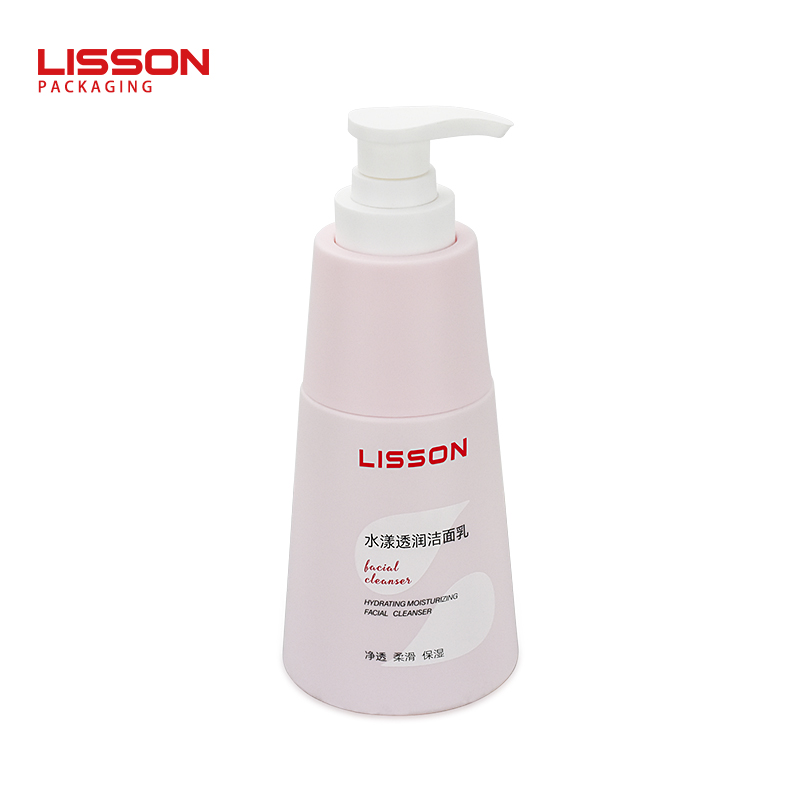
For instance, LISSON's 200ml PET lotion pump bottle is designed for personal care applications. A capacity of this kind can provide a practical balance between product volume and everyday handling, depending on the intended use.
When selecting a bottle size, brands should consider how much product customers normally apply, how frequently it is used, and whether the packaging is intended for home use, travel, or professional settings. The best capacity is the one that suits the product's real usage pattern rather than simply offering the largest possible volume.
Skincare routines do not always happen at home. People may need sunscreen during outdoor activities, hand cream while commuting, or a small amount of moisturizer when traveling. Lightweight plastic packaging makes it easier to include these products in a daily bag without carrying unnecessarily heavy containers.
Portable packaging is most useful when the bottle is designed around the way the product is applied. A compact shape can fit into a toiletry pouch, while a suitable screw cap or locking mechanism can help reduce accidental dispensing during transport. The closure must still be tested for leakage under expected handling conditions.
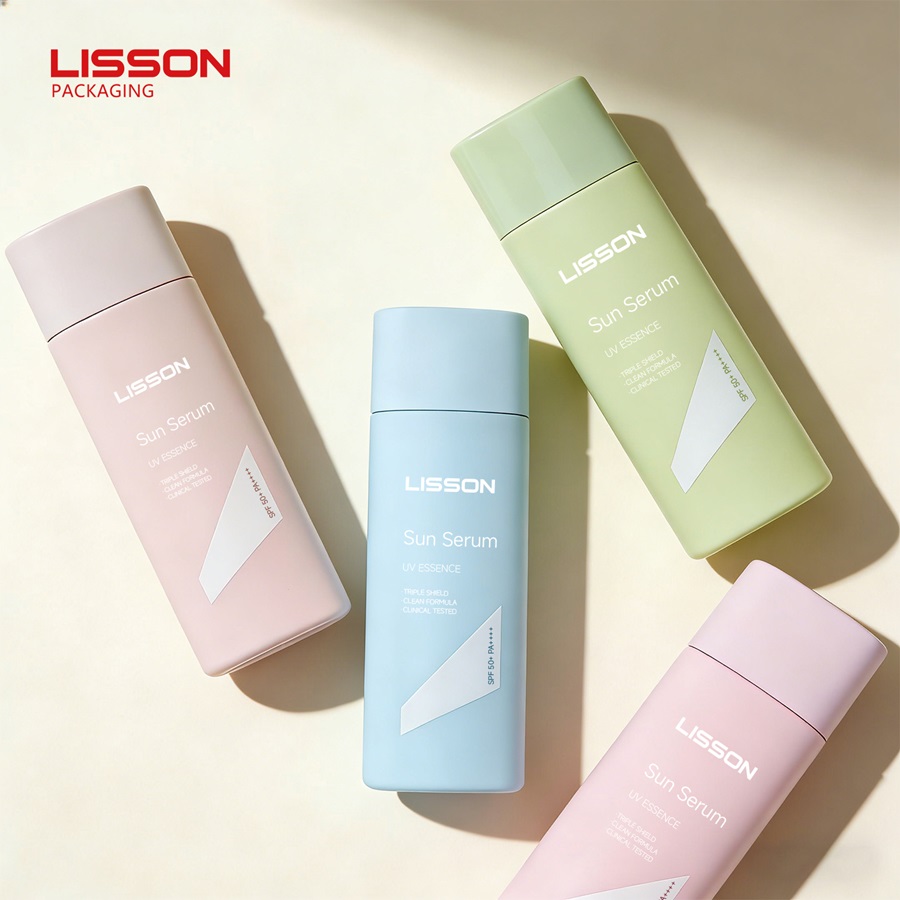
Sunscreen is a clear example. Users often need to reapply it throughout the day, so easy handling and controlled dispensing can make a difference to the overall experience. LISSON's 50ml plastic sunscreen bottle with a screw cap is designed for sunscreen, hand cream, and similar products that benefit from compact packaging.
For brands selling travel skincare, outdoor personal care, or compact daily essentials, the important details include bottle dimensions, opening design, cap security, dispensing control, and compatibility with the formula. These features help make a portable package practical rather than merely small.
Suitable packaging can help users avoid some common sources of product waste. A compatible pump may dispense a controlled amount, while a bottle with a suitable opening can make the contents easier to access. Clear packaging may also help users see how much product remains, making it easier to plan when to replace it.
These benefits depend on the complete packaging design. The formula's thickness, the bottle's internal shape, the pump's dip tube, and the dispensing mechanism all influence how much product can be removed. A container that leaves a large amount of product inaccessible may frustrate users even if its exterior design looks attractive.
Brands should therefore evaluate the amount dispensed per pump, the amount of residue left inside, and whether the packaging continues to function properly near the end of its service life. Testing with the actual formula is more reliable than assuming that every plastic bottle will deliver the same results.
For products where limiting direct contact with the contents is a priority, brands can also consider airless bottle packaging. Airless systems are designed to dispense products through a pump mechanism and can help reduce repeated direct exposure to the remaining formula. Their actual protective performance depends on the design, formulation, and compatibility testing.
Different plastic materials offer different combinations of appearance, flexibility, rigidity, and processing characteristics. Choosing the right material helps brands balance user experience, formula compatibility, and packaging design.
Material choice should not be based on appearance alone. Brands need to confirm compatibility with the formula, including its oils, solvents, active ingredients, and storage conditions. They should also consider the closure material, pump components, filling temperature, and transport requirements.
LISSON provides different options through its cosmetic packaging product range, allowing brands to compare bottle formats and identify a design that suits their skincare application.
Convenience is not only about the bottle's basic function. Shape, surface finish, color, labeling, and dispensing components all influence how comfortable and intuitive the packaging feels during everyday use.
A bottle with a comfortable grip can be easier to handle with wet hands. A clearly labeled container helps customers identify products quickly, especially when a skincare routine includes several steps. A suitable pump or cap can also make the product easier to use without unnecessary twisting, squeezing, or pouring.
Customization gives brands the opportunity to match these details to their target customers and product positioning. For example, a daily body lotion may need a larger capacity and an easy-to-press pump, while a premium facial treatment may call for a smaller bottle with a more precise dispensing mechanism.
Through its custom cosmetic bottle design service, LISSON supports packaging customization options such as bottle shape, color, logo, printing, and surface finish. The final design should maintain a balance between brand presentation, filling requirements, production feasibility, and practical daily use.
For skincare brands, the most convenient bottle is the one that works reliably with the formula and fits the customer's routine. Before confirming a packaging design, review the following points:
For B2B buyers, reviewing samples before mass production is particularly useful. It allows the team to evaluate how the bottle feels in the hand, how easily the product is dispensed, whether the closure stays secure, and how the packaging performs with the intended formula.
How do plastic cosmetic bottles improve daily skincare convenience?
They combine lightweight construction, practical bottle shapes, different capacity options, and compatible dispensing systems. These features can make skincare products easier to hold, carry, dispense, and store.
Are plastic cosmetic bottles suitable for facial serums and moisturizers?
Yes, provided the bottle material and dispensing system are compatible with the specific formula. Pumps, droppers, and other dispensing formats can be selected according to the product's viscosity, dosage requirements, and intended use.
Which plastic bottle is best for travel skincare products?
A compact bottle with a secure closure and suitable dispensing mechanism is often a practical choice. The ideal capacity depends on how much product the customer needs and the relevant travel requirements.
Do pump bottles help reduce skincare product waste?
A properly matched pump can help users dispense controlled portions and reduce spills. However, the actual amount dispensed and the amount of product remaining in the bottle depend on the pump, formula, and container design.
Can plastic cosmetic bottles be customized for skincare brands?
Yes. Depending on the selected product and supplier capabilities, brands may be able to customize bottle shapes, colors, logos, printing, and surface finishes. Sampling and compatibility testing should be completed before mass production.
How should brands choose between a regular pump bottle and an airless bottle?
A regular pump bottle may be suitable for many everyday lotions and personal care products. An airless bottle may be preferable when the formula and packaging requirements call for a different dispensing and product-exposure design. The final choice should be based on formula compatibility, dispensing performance, and testing results.
Plastic cosmetic bottles improve daily skincare convenience when their material, size, shape, and dispensing system are matched to the product and the way customers use it. Lightweight construction supports portability, compatible pumps simplify dispensing, and thoughtful bottle design can make daily routines more comfortable and organized.
For skincare and personal care brands, packaging selection should begin with the formula and the intended user experience. From lotion pump bottles to portable sunscreen containers and customized plastic packaging, LISSON offers options for businesses developing practical cosmetic packaging solutions.
Explore the LISSON cosmetic bottle collection to compare available formats, or visit the LISSON contact page to discuss your packaging requirements, samples, and customization options.